Tesla Q3 2025 Earnings Deep Dive: Records Shattered, but the Real Story Lies in the AI Horizon
Tesla's Q3 2025 report marks a crucial rebound, integrating ambitious forward-looking statements that could redefine mobility and robotics. While profits fell short of Wall Street's lofty expectations due to rising costs and policy changes, underlying momentum in deliveries, energy storage, and AI advancements paint a picture of a company accelerating towards a trillion-dollar valuation—not just through cars, but through software and autonomous driving.
Financial Highlights: A Record Quarter Under Profit Pressure
Tesla's Q3 2025 performance showcased robust revenue growth, fueled by surges in vehicle deliveries and energy deployments, despite profitability facing headwinds from tariffs, supply chain adjustments, and the expiry of key EV tax credits.
Revenue: $28.1 billion, up 12% year-over-year and 25% quarter-over-quarter, exceeding analyst expectations of $26.46 billion. This was driven by a record 497,099 vehicle deliveries (up 7% YoY) and 12.5 GWh of energy storage deployed (up 81% YoY). Automotive revenue alone reached $21.2 billion, while the energy sector contributed $3.4 billion (up 44% YoY), highlighting its growing role in Tesla's revenue diversification.
Earnings Per Share (EPS): $0.50 (non-GAAP), approximately 7% below the consensus estimate ($0.55). GAAP net income was not explicitly detailed but implied around $1.6 billion based on EPS figures. The miss stemmed from declining regulatory credit sales ($417 million vs. $739 million in the prior year), increased costs due to import tariffs on components, and higher R&D expenditures in AI and robotics.
Gross Margin: Overall gross margin declined to 18% (down 1.85 percentage points YoY), with automotive gross margin at 17%, attributed to a product mix shift towards lower-priced models like the updated Standard Range Model 3/Y and tariff impacts. However, energy storage gross margin shined at 31.4%, a slight YoY increase, driven by manufacturing efficiencies and strong demand from AI data centers.
Cash Flow and Balance Sheet: Free cash flow surged to $4 billion (up 46% YoY), boosting cash and investments to a record $41.6 billion. This fortress of liquidity provides ample funding for CAPEX in new factories and AI infrastructure, which saw a modest increase to $2.25 billion this quarter. Operational Milestones: Vehicle production stood at 447,450 units, reflecting inventory drawdown to optimize cash conversion. Service revenue grew 25% to $3.48 billion, and the Supercharger network expanded by 3,500 stalls, opening to more third-party EVs via the NACS standard.
These numbers represent a rebound from a soft H1 2025 performance (YoY delivery decline). The pull-forward effect from the expiration of US EV tax credits on September 30th boosted US sales, but Europe lagged due to competition from BYD and VW, exacerbated by Musk's political comments. Analysts noted softer operating leverage and pricing pressure, but the energy boom and rising AI provided a counterbalance.
On Current Performance Drivers
He attributed the surge in energy storage to innovations like Megapack 3 and the new "Mega Block" system, which integrates multiple units to accelerate grid deployment. "This could double US energy production without building new power plants," Musk quipped, noting AI data center demand as a significant tailwind. Taneja echoed this, pointing to the structural advantage of energy's 31% gross margin relative to the automotive business.
Challenges Not Shied Away From: Musk directly addressed the EPS miss, blaming it on "credit fade" from Trump-era policy shifts that removed emissions penalties, thereby reducing regulatory credit income. He also cited supply chain adjustments due to tariffs and weaker European sales driven by "political backlash." Despite this, Musk emphasized cost controls, including increased 4680 cell production and raw material deflation, though he conceded stabilized lithium and nickel prices slowed this benefit.
Forward-Looking Statements: Accelerating Towards Autonomy and Abundance
The real climax of the call came in the outlook section, where Musk outlined aggressive plans spanning automotive, AI, and robotics. With " newfound confidence" in unsupervised Full Self-Driving (FSD), Tesla aims to scale production "as fast as humanly possible," targeting a 3 million annual run rate within 24 months.
Vehicle Roadmap: New affordable models, including updated Model 3/Y Standard Range ($36,990/$39,990) and a three-row Model YL for the Chinese market, will drive volume. Cybertruck deliveries significantly ramped, with plans for expansion beyond North America in 2026. Musk confirmed Cybercab (a robotaxi without a steering wheel) production to begin Q2 2026, optimized for autonomous driving.
Autonomy and Robotaxis: FSD v14 rollout "amazed users," with 6 billion miles of real-world driving logged and a 12% paid user adoption. Robotaxi services are live in Austin (unsupervised by year-end) and the Bay Area, covering 1.25 million miles. Plans include expansion to 8-10 US markets (e.g., Nevada, Florida) by late 2025, with safety drivers phased out in initial months.
Musk predicted FSD reliability would surpass human drivers by 2026, unlocking ride-hailing revenue. "Autonomy could disrupt last-mile trucking," he added, hinting at Semi integration.
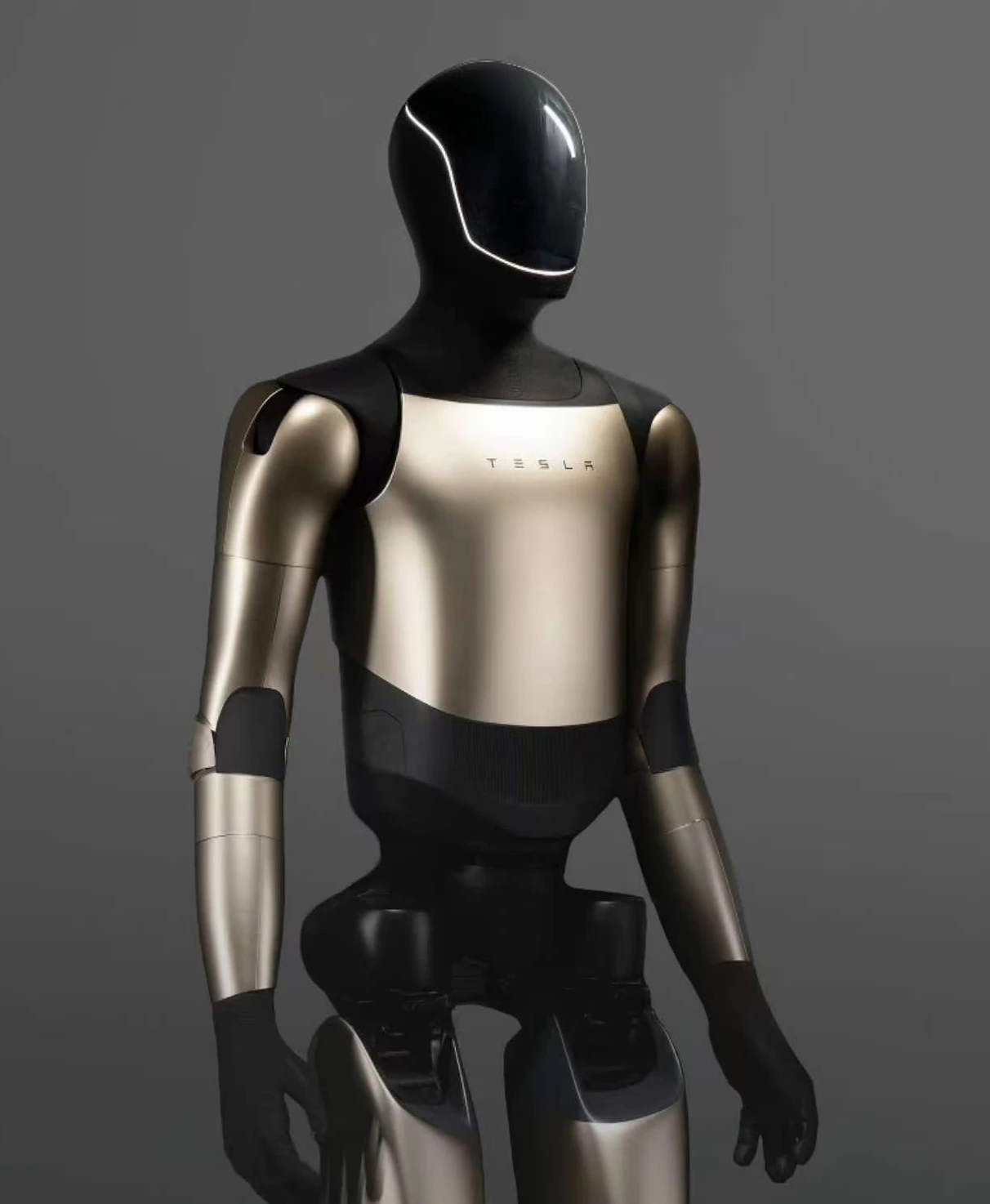
Optimus Humanoid Robot: Hailed as Tesla's "biggest product ever," Optimus V3 will debut in Q1 2026, with production scaling to 1 million units per year by late 2026 despite supply chain challenges. Musk envisions it enabling "sustainable abundance" by increasing productivity to 5x human levels, potentially eradicating poverty. Initial applications include factory tasks like material handling, evolving to home and industrial uses. "80% of Tesla's value will come from Optimus," Musk boldly declared.
AI Infrastructure: Tesla's AI training compute reached 81,000 H100 equivalent GPUs, with a new AI chip A5 (in-house designed) offering 10-40x efficiency gains. Dual sourcing from TSMC and Samsung ensures supply, starting Q1 2026. Musk highlighted video generation models for robot training, akin to "dreamscape" scenarios to accelerate learning. Energy Outlook: 2026 deployment is expected to surpass 2025's record, with the Megapack Houston factory expanding to 50 GWh. Musk tied this to AI's power demands, positioning Tesla as a grid optimizer.
Expert Analysis: Risks, Opportunities, and the Path to a Trillion-Dollar Valuation
Q3 2025 validates Tesla's transformation from a pure EV manufacturer to an AI powerhouse. The energy segment's 21% gross profit contribution (up 15% YoY) signals diversification, with potential gross margins reaching mid-30s as the Houston factory expands. Service gross margin at 10.5% could hit low teens through Supercharger monetization.
However, risks remain: Automotive gross margins could stabilize in the mid-teens amid tariffs and product mix dilution, and FSD regulatory hurdles could delay high-margin software revenue. Musk's political ties add volatility—Trump's policies could remove subsidies but favor deregulation for autonomous driving. Optimus delays (from 5,000 units in 2025 to mid-2026 ramp-up) highlight execution challenges, but if scaled, it could indeed dominate 80% of Tesla's value through productivity gains.
Bull Case: Robotaxi fleet expands to millions, FSD adoption hits 50%, and energy output doubles—propelling market cap to $2-3 trillion by 2030. Bear Case: Macroeconomic slowdowns and competition erode deliveries, limiting annual growth to 10-15%.
In conclusion, Q3 2025 wasn't perfect, but it reaffirmed Tesla's trajectory. As Musk stated, "We're not just making cars; we're building the future." Watch for FSD v14 feedback and robotaxi expansion—these will define the 2026 narrative.